Mara Beck · 16 October 2026
Tracing the Development of Automated Verification Systems for Authenticity in Online Flask Trading Networks
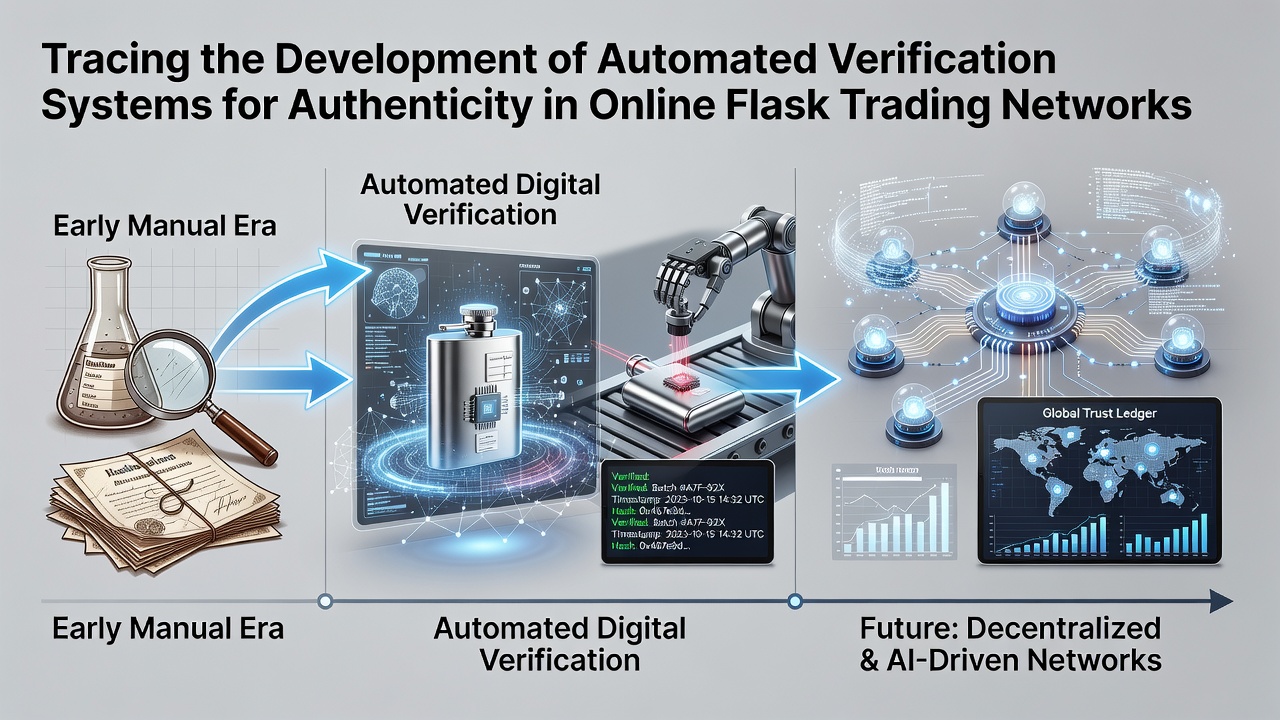
Automated verification systems for authenticity in online flask trading networks emerged from a series of incremental technological shifts that began in the early 2000s, when collectors and platforms first combined basic image analysis with database cross-referencing to flag potential counterfeits. These initial setups relied on simple hash matching for serial numbers and surface markings, yet they quickly expanded as trading volumes grew and participants demanded faster checks. Researchers documented steady progress through the integration of machine learning models that compared flask engravings, material compositions, and provenance records against expanding reference libraries maintained by specialized forums and auction houses.
Early Digital Foundations and Database Integration
By the mid-2010s, several collector networks had already moved beyond manual inspection by linking high-resolution photographs to centralized registries that stored historical ownership data. These systems flagged discrepancies in weight measurements, engraving depth, and metal alloy signatures, while platform operators updated their protocols after each reported incident. Data from industry reports indicate that error rates dropped significantly once optical character recognition tools began processing batch uploads from multiple sellers simultaneously, allowing networks to handle higher transaction loads without proportional increases in staff time.
Advancements in Machine Learning and Pattern Recognition
Subsequent phases incorporated convolutional neural networks trained on thousands of verified flask images, enabling the detection of subtle manufacturing variations that earlier methods overlooked. Observers note that developers refined these models by incorporating feedback loops from verified transactions, which improved accuracy on edge cases such as repaired vintage pieces or regional production differences. In parallel, spectroscopic attachments for mobile devices allowed users to capture material data directly during listings, feeding real-time results into the same verification pipelines and reducing reliance on centralized labs.
Blockchain and Distributed Ledger Applications
Blockchain entries appeared around 2020 as a way to create immutable chains of custody that linked physical flasks to digital certificates. Platforms began embedding QR codes and NFC tags that referenced ledger entries containing timestamps, seller histories, and prior authentication results. According to a NIST framework on digital authentication, such distributed approaches helped standardize data formats across competing networks while preserving privacy through selective disclosure mechanisms. Trading volume statistics from that period show increased buyer confidence in listings that carried these linked records, although adoption varied by region and platform size.

Integration of Multi-Modal Sensors and Real-Time Analysis
More recent iterations combine visual, chemical, and acoustic data streams into unified scoring systems that assign confidence levels to each listing. These platforms process inputs from multiple sensors during upload, then cross-check results against both public registries and proprietary archives maintained by collector associations. Figures from European Commission digital economy reports reveal that networks employing such layered verification saw measurable declines in dispute rates between 2023 and 2025, particularly when combined with automated alerts that prompted sellers to provide additional documentation before listings went live.
Current State and October 2026 Developments
By October 2026, several major flask trading networks had deployed updated verification suites that incorporated generative adversarial networks to simulate potential forgery techniques and test system resilience. These tools operate continuously, scanning new and archived listings while updating reference models based on confirmed cases from the preceding quarter. Academic studies published through Canadian research institutions highlight how these adaptive systems reduced false positives compared with static rule-based predecessors, enabling smoother user experiences without compromising detection capabilities. Network operators continue to refine access controls and audit trails, ensuring that verification outcomes remain traceable for regulatory or dispute-resolution purposes.
Conclusion
The progression of automated verification in flask trading networks reflects broader patterns in digital authentication technology, moving from basic database lookups to sophisticated multi-modal platforms that operate at scale. Continued refinement depends on collaboration between platform developers, standards bodies, and collector communities to maintain data quality and system interoperability across different jurisdictions and device types.